South Africa’s Commercial Property Development Industry: A Comprehensive Market Analysis for 2025

The Rainbow Nation’s commercial real estate sector demonstrates remarkable resilience amid global economic uncertainty, positioning itself as a premier investment destination in Africa.
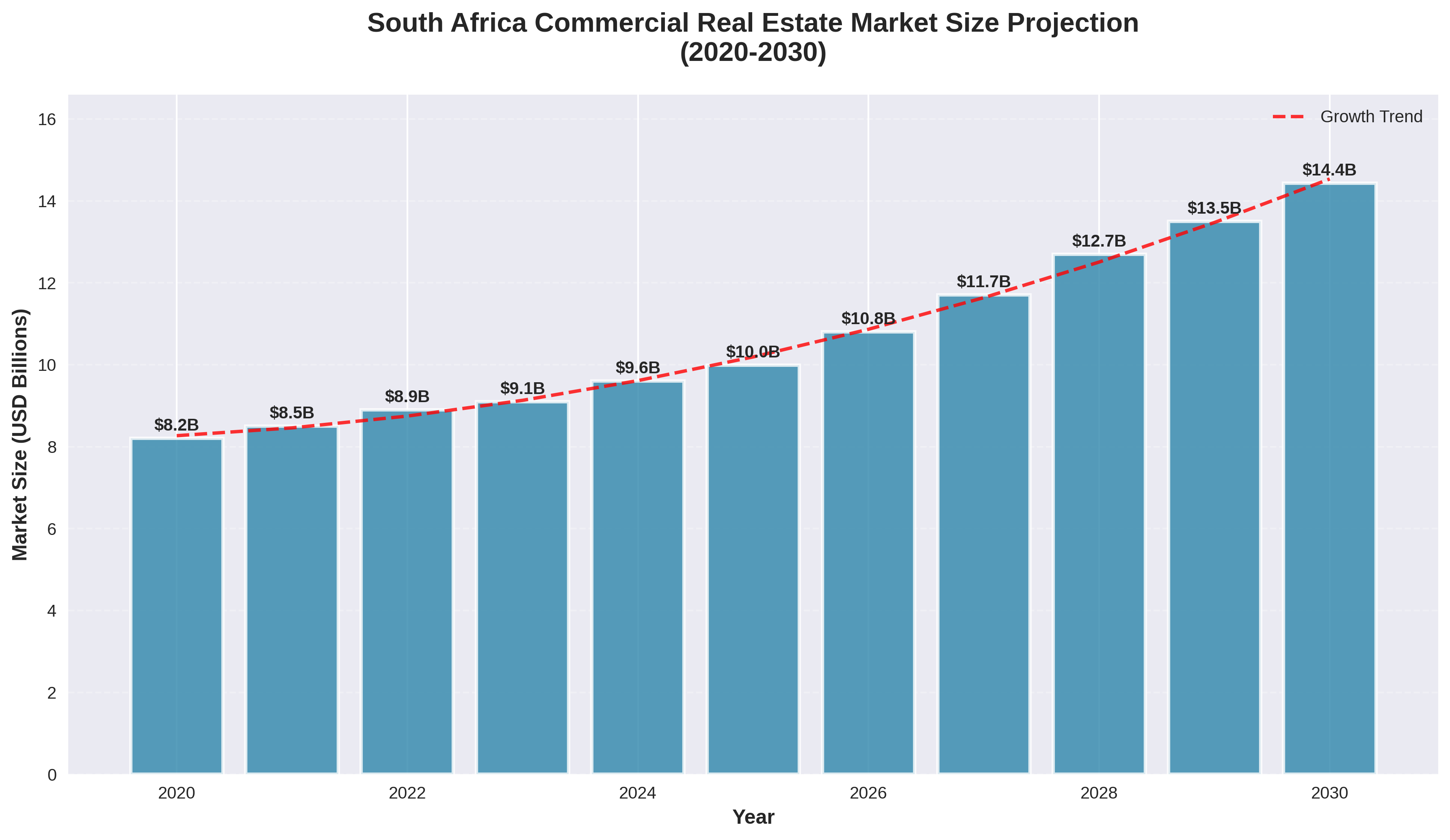
South Africa’s commercial property development industry stands at a pivotal juncture in 2025, demonstrating extraordinary resilience despite global economic headwinds. With a market valuation reaching USD 9.99 billion and projected to grow at a robust 7.63% CAGR through 2030, the sector presents compelling investment opportunities across diverse asset classes. This comprehensive analysis reveals how strategic urban development, infrastructure investments, and evolving tenant demands are reshaping the commercial real estate landscape across major metropolitan areas.
The industry’s recovery from pandemic-induced challenges has been nothing short of remarkable. Investment volumes surged to a record-breaking R27 billion in 2024, representing a 34% increase from the previous year. This growth trajectory underscores investor confidence in South Africa’s long-term economic fundamentals and the commercial property sector’s potential to deliver superior risk-adjusted returns.
Market Size and Growth Trajectory: Unprecedented Expansion
South Africa’s commercial real estate market has experienced a transformative growth phase, with market valuations consistently exceeding analyst expectations. The sector’s evolution from USD 8.2 billion in 2020 to the current USD 9.99 billion represents a compound annual growth rate that outpaces many developed markets, particularly when adjusted for local economic conditions.
Industry projections indicate the market will reach USD 14.43 billion by 2030, driven by several macroeconomic factors including urbanization trends, foreign direct investment flows, and government infrastructure spending initiatives. This growth trajectory positions South Africa as the most attractive commercial real estate market in sub-Saharan Africa, offering investors diversification opportunities previously unavailable in emerging markets.
The resilience demonstrated throughout 2024 particularly stands out, with the market successfully navigating challenges including load shedding concerns, political uncertainty, and global economic volatility. Record-breaking transaction volumes indicate strong institutional confidence, with both local and international investors actively expanding their South African commercial property portfolios.
Sectoral Analysis: Diverse Opportunities Across Asset Classes
Retail Sector: Leading Market Recovery
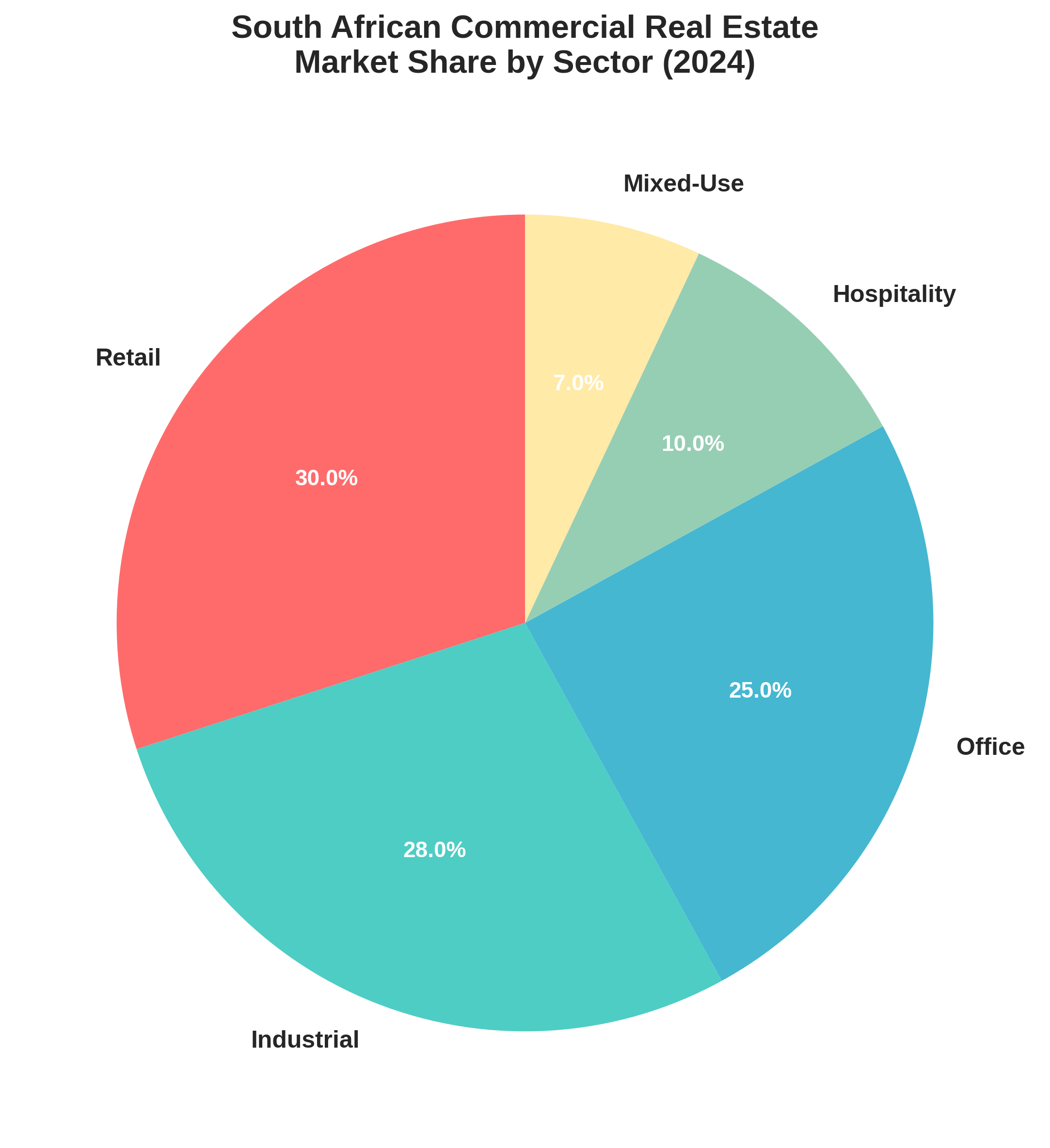
The retail sector has emerged as the standout performer in 2024, capturing 30% of the total investment volume and marking the first time since 2021 that retail assets have overtaken industrial assets in investor preference. This remarkable turnaround reflects the sector’s successful adaptation to post-pandemic consumer behaviors and the integration of omnichannel retail strategies.
Major shopping centers across Johannesburg, Cape Town, and Durban have reported significant improvements in foot traffic, with some premium locations achieving visitor numbers comparable to those seen before the COVID-19 pandemic. The sector’s recovery has been particularly pronounced in convenience retail, mixed-use developments that combine retail with residential components, and experiential retail formats that emphasize entertainment and dining.
Retail yields have stabilized around 9.5%, making the sector attractive to yield-focused investors. The development pipeline includes several major shopping center expansions and renovations, with developers increasingly incorporating sustainability features and flexible spaces that can adapt to changing tenant requirements.
Industrial and Logistics: E-commerce Revolution
The industrial and logistics sector continues to benefit from South Africa’s e-commerce boom, with average yields of 8.25% reflecting strong investor demand for quality assets. The sector’s growth is fundamentally driven by the rapid expansion of online retail, which has necessitated sophisticated last-mile delivery infrastructure and modern warehouse facilities.
Cape Town and Johannesburg have emerged as primary logistics hubs, with vacancy rates remaining below 5% across most submarkets. This tight supply-demand dynamic has supported rental growth, with prime industrial assets commanding premium rates. The development pipeline includes several state-of-the-art distribution centers designed to serve both domestic and regional markets.
Investment in cold storage facilities and pharmaceutical-grade warehouses has accelerated, reflecting growing demand for specialized logistics solutions. International logistics companies have expanded their operations in South Africa, recognizing the country’s strategic position as a gateway to African markets.
Office Sector: Navigating Hybrid Work Challenges
The office sector faces the most significant structural challenges, with hybrid work arrangements fundamentally altering space requirements. Vacancy rates vary dramatically across metropolitan areas, with Johannesburg experiencing 19.3% vacancy compared to Pretoria’s more manageable 12.1%.
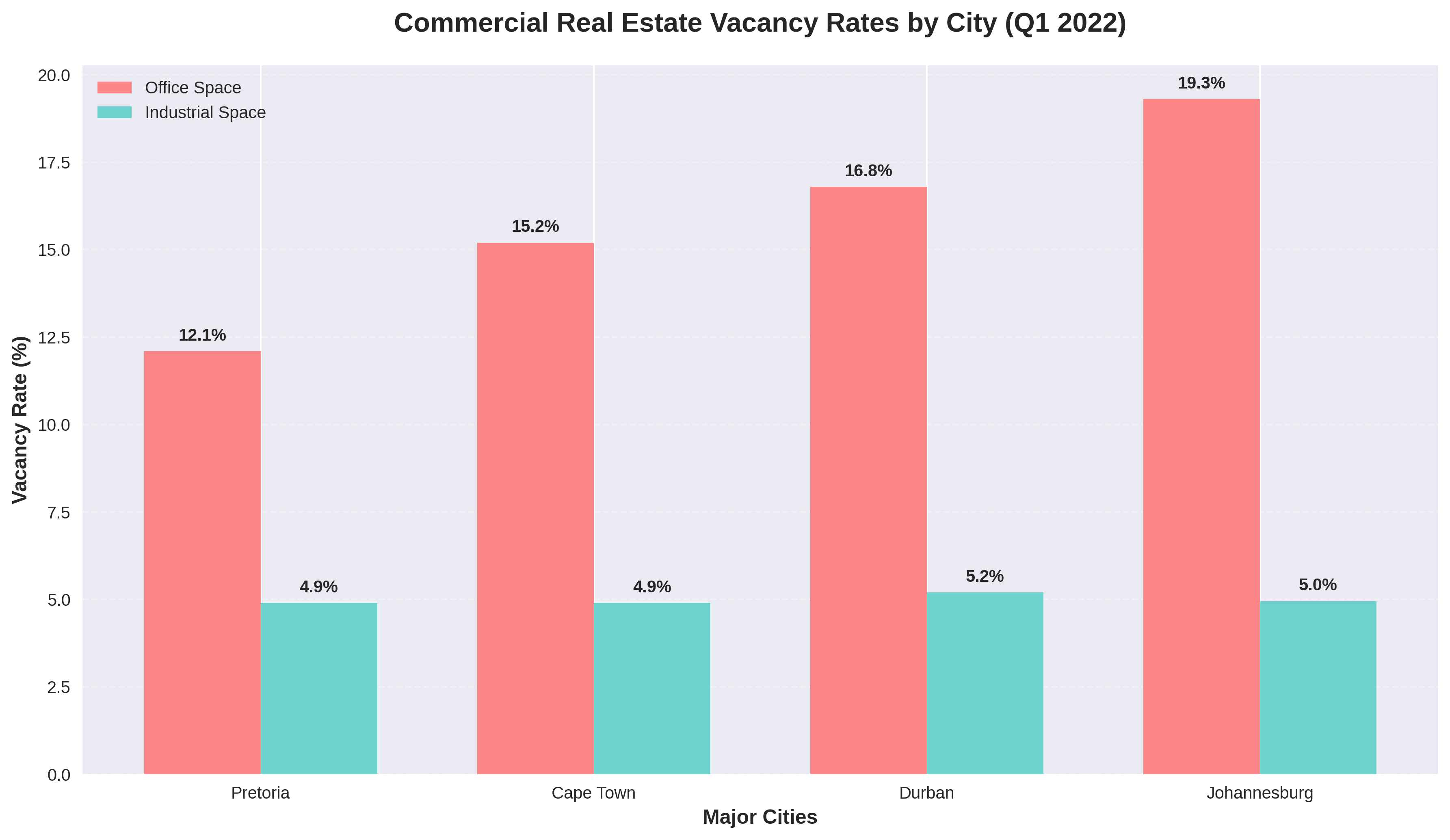
Figure 3: Commercial Real Estate Vacancy Rates by City (Q1 2022)
Despite these challenges, the office market is experiencing a flight-to-quality phenomenon, with tenants increasingly demanding modern, flexible workspace solutions. Premium office buildings incorporating wellness features, advanced technology infrastructure, and sustainability credentials continue to achieve healthy occupancy rates and rental growth.
The sector’s evolution toward flexible lease arrangements and co-working concepts has created opportunities for adaptive developers. Several major office buildings have undergone significant renovations to accommodate changing tenant preferences, with emphasis on collaborative spaces, wellness amenities, and technology integration.
Mixed-Use Developments: Urban Densification Driver
Mixed-use developments represent the fastest-growing segment within South Africa’s commercial property landscape, capturing 7% of current market share but projected to expand significantly through 2030. These projects address multiple urban challenges simultaneously, including housing shortages, transportation inefficiencies, and the provision of community services.
Major mixed-use projects in Johannesburg’s Sandton district and Cape Town’s V&A Waterfront area have demonstrated the market appetite for integrated developments that combine office, retail, residential, and entertainment components. These projects achieve premium valuations due to their ability to generate multiple revenue streams and create vibrant urban communities.
Regional Market Analysis: Metropolitan Powerhouses
Johannesburg: Financial Capital Dominance
Johannesburg remains the epicenter of South Africa’s commercial property market, accounting for approximately 35% of the total market activity. The Sandton Central Business District continues to attract premium office tenants, while emerging areas like Rosebank and Melrose Arch offer development opportunities.
The city’s industrial market benefits from its proximity to O.R. Tambo International Airport and major transportation networks. Recent infrastructure improvements, including the Gautrain expansion and road upgrades, have enhanced accessibility and supported property values across multiple sectors.
Investment activity in Johannesburg reached record levels in 2024, with several landmark transactions including major office building acquisitions and industrial portfolio sales. The city’s diverse economic base provides resilience against sector-specific downturns.
Cape Town: International Investment Magnet
Cape Town has emerged as the preferred destination for international commercial property investors, achieving the highest market activity levels nationally. The city’s unique combination of natural beauty, established infrastructure, and business-friendly environment continues to attract multinational corporations and creative industries.
The V&A Waterfront’s expansion projects and the proposed River Club development represent significant opportunities for value creation. Cape Town’s office market has demonstrated greater resilience than other metropolitan areas, with vacancy rates remaining below the national average.
Industrial demand in Cape Town is driven by the port’s strategic importance and the city’s role as a manufacturing hub for luxury goods and wine exports. Several major logistics companies have established regional headquarters in the town, supporting demand for premium industrial facilities.
Durban and Pretoria: Emerging Opportunities
Both Durban and Pretoria offer compelling value propositions for commercial property investors seeking exposure to South Africa’s growth potential at attractive entry valuations. Durban’s port-related industrial opportunities and Pretoria’s government sector stability provide diversification benefits.
Investment Volume Trends: Record-Breaking Performance
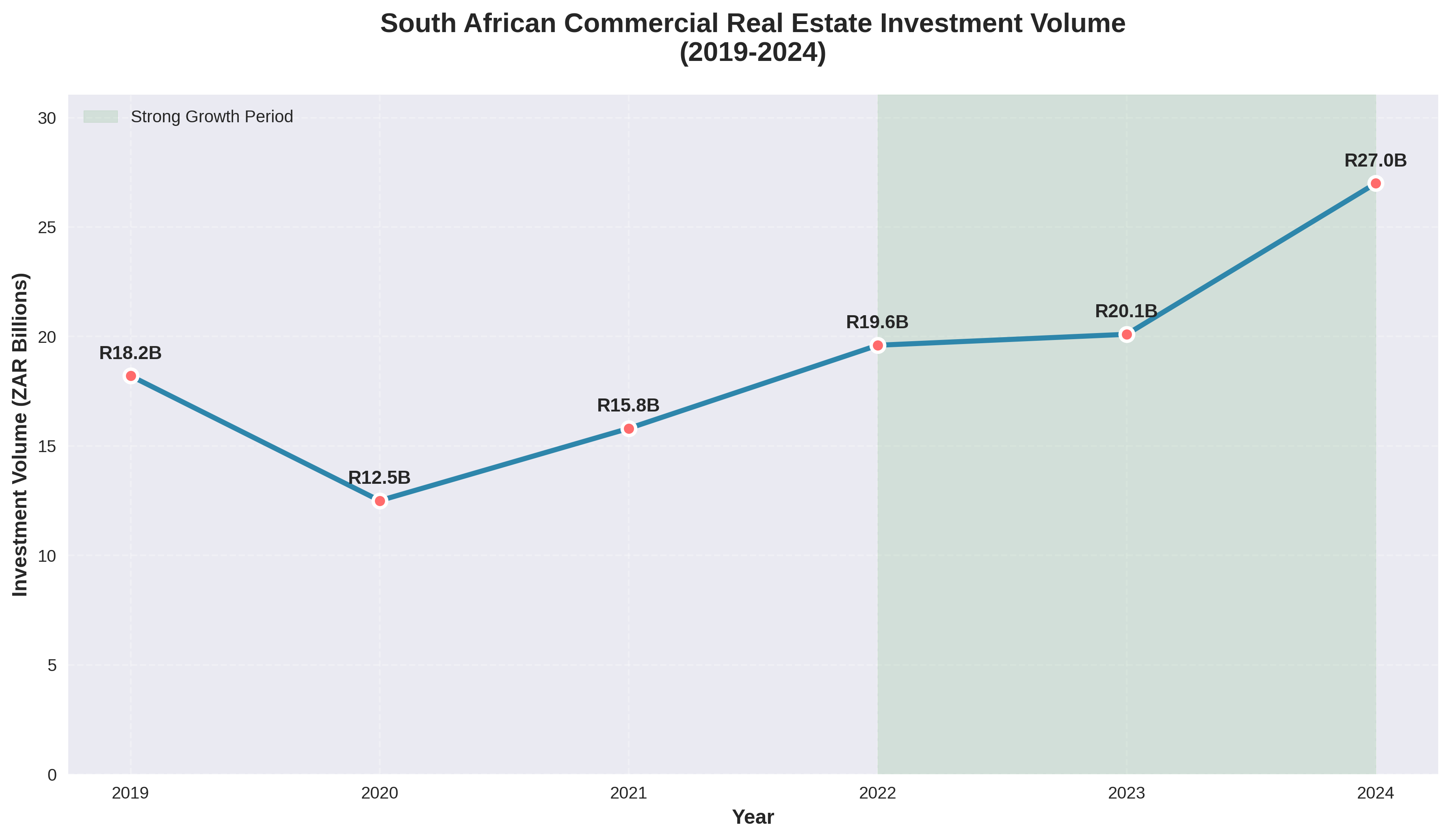
Figure 4: South African Commercial Real Estate Investment Volume (2019-2024)
The 2024 investment surge to R27 billion represents the culmination of several years of steady market recovery. This figure exceeded analyst expectations, demonstrating the sector’s ability to attract both domestic and international capital despite global economic uncertainty.
Institutional investors, including pension funds, insurance companies, and real estate investment trusts, drove the majority of transaction activity. International investors, particularly those from Europe and North America, significantly increased their allocations to South African commercial properties throughout 2024.
The transaction pipeline for 2025 appears robust, with several significant portfolio sales and development projects in advanced stages of development. Market participants anticipate continued strong investment flows, driven by favorable exchange rate conditions and attractive risk-adjusted returns compared to other emerging markets.
Key Market Players and Industry Leadership
| Company | Specialization | Market Focus | Key Strengths |
|---|---|---|---|
| Growthpoint Properties | REIT/Diversified | National | Listed REIT with strong portfolio |
| Amdec Group | Mixed-Use Development | Gauteng/National | Luxury developments |
| Pam Golding Properties | Full-Service Real Estate | National | Established brand & network |
| Equites | Industrial/Logistics | Industrial Hubs | Industrial expertise |
| Chas Everitt Property Group | Residential & Commercial | National | Integrated Services |
The industry’s consolidation around established players has created market stability while enabling smaller developers to focus on niche opportunities. These market leaders have consistently demonstrated strong performance across various economic cycles, providing investors with confidence in the quality of management and execution capabilities.
Regional Performance Metrics: Metropolitan Comparison
| City/Region | Office Vacancy Rate (%) | Industrial Vacancy Rate (%) | Prime Office Yield (%) | Industrial Yield (%) | Market Activity Level |
|---|---|---|---|---|---|
| Johannesburg | 19.3 | 4.95 | 10.5 | 8.25 | High |
| Cape Town | 15.2 | 4.90 | 9.8 | 8.50 | Very High |
| Durban | 16.8 | 5.20 | 10.2 | 8.80 | Moderate |
| Pretoria | 12.1 | 4.90 | 9.5 | 8.00 | Moderate |
Investment Opportunities by Sector: Strategic Outlook
| Sector | Investment Appeal | Average Yield (%) | Growth Outlook | Key Drivers |
|---|---|---|---|---|
| Industrial & Logistics | Very High | 8.25 | Strong | E-commerce growth |
| Retail | High | 9.50 | Recovering | Consumer recovery |
| Office | Moderate | 10.00 | Challenging | Hybrid work impact |
| Mixed-Use | High | 9.00 | Positive | Urban densification |
| Healthcare | Emerging | 8.80 | Very Strong | Healthcare demand |
Technology and Innovation: Transforming Property Development
South Africa’s commercial property sector has embraced technological innovation across multiple dimensions, from innovative building systems to advanced property management platforms. PropTech adoption has accelerated significantly, with developers incorporating Internet of Things (IoT) sensors, energy management systems, and tenant experience applications.
Building Information Modeling (BIM) has become standard practice among leading developers, enabling more efficient construction processes and lifecycle management. Several significant projects have achieved international green building certifications, reflecting the industry’s commitment to sustainability and environmental responsibility.
The integration of renewable energy systems, particularly solar installations, has become a competitive advantage for commercial properties. Many developments now achieve energy independence, providing tenants with cost savings and environmental benefits while enhancing property valuations.
Regulatory Environment and Government Initiatives
The South African government’s commitment to infrastructure development and economic transformation has created a supportive environment for commercial property investment. Special Economic Zones (SEZs) offer attractive incentives for industrial development, while urban renewal programs provide opportunities for mixed-use developments in previously underutilized areas.
Recent regulatory changes have streamlined the development approval process, reducing project timelines and development costs. The Implementation of the Property Practitioners Act has enhanced market transparency and investor protection, contributing to increased international investor confidence.
Government infrastructure investments, including the renewable energy program and transportation network upgrades, have positively impacted commercial property values across multiple metropolitan areas. These initiatives support long-term economic growth and enhance South Africa’s competitiveness as an investment destination.
Sustainability and ESG Considerations
Environmental, Social, and Governance (ESG) factors have become central to commercial property investment decisions in South Africa. Leading developers now incorporate sustainability principles throughout the project lifecycle, from site selection and design through construction and operations.
Green building certifications, including Green Star SA and LEED standards, have become market differentiators that command premium rents and achieve higher occupancy rates. Tenant demand for environmentally responsible buildings continues to grow, driven by corporate sustainability commitments and cost considerations.
Social impact initiatives, including community development programs and the utilization of local suppliers, have enhanced project acceptance and garnered government support. These programs create shared value for developers, communities, and investors while contributing to South Africa’s broader economic transformation objectives.
Future Outlook and Investment Implications
South Africa’s commercial property development industry is positioned for sustained growth through 2030, supported by favorable demographic trends, infrastructure investments, and increasing integration with global markets. The sector’s resilience in the face of recent challenges demonstrates its fundamental strength and adaptability.
Key growth drivers include continued urbanization, expanding middle-class consumption, and South Africa’s strategic position as a gateway to African markets. The development pipeline includes several transformational projects that will reshape metropolitan skylines and create new investment opportunities.
Investors seeking exposure to emerging market commercial real estate will find South Africa’s combination of established market infrastructure, attractive yields, and growth potential compelling. The sector’s evolution toward modern, sustainable developments aligned with international standards provides confidence in long-term value creation.
The industry’s commitment to innovation, sustainability, and stakeholder value creation positions it for continued success in an increasingly competitive global investment environment. As South Africa’s economy continues its recovery and transformation, commercial property development will play a pivotal role in supporting growth and creating lasting value for both investors and communities. Contact Currie Group for all your property requirements.
Sources: This analysis is based on the latest market data from leading research firms including JLL (https://www.jll.com/en-us/insights/market-perspectives/south-african-investment-review), Mordor Intelligence (https://www.mordorintelligence.com/industry-reports/commercial-real-estate-market-in-south-africa), and Statista Market Forecast. Investors should conduct thorough due diligence and consult with qualified professionals before making investment decisions.