Cape Town
Discovering the City Of Cape Town: Area Profile
Are you trying to learn what makes Cape Town special? It is South Africa’s oldest City and serves as its legislative capital with nearly five million residents. This article covers its rich history, diverse population, and unique climate to guide your exploration. Discover what it has to offer.
Key Takeaways
- Founded in 1652, Jan van Riebeeck established Cape Town as South Africa’s oldest City. The Castle of Good Hope, built in 1679, is the nation’s oldest building.
- Diverse Population: As of 2022, nearly 4.77 million people live in Cape Town. The population is 46% Black, 35% Coloured, 16% White, and 2% Indian or Asian. People speak 186 languages, with Afrikaans, Xhosa, and English being the most common.
- Mediterranean Climate: Cape Town has warm, dry summers and mild, wet winters. Average temperatures range from 70°F (21°C) in summer to 55°F (13°C) in winter. The City receives about 26 inches of rain each year.
- Famous Landmarks: Key attractions include Table Mountain and the V&A Waterfront. These sites boost tourism and support local businesses.
- Steady Growth: The greater Cape Town area grows by 2.6% each year. This growth makes the City vibrant and attractive for investment.
- Commercial and Industrial Property: For all your property requirements, contact Currie Group.
Brief history of Cape Town
Jan van Riebeeck started the VOC Cape Colony on April 6, 1652. The Castle of Good Hope was finished in 1679. It is South Africa’s oldest building. In 1808, the British ended the slave trade.
This changed Cape Town’s society. By 1814, the British had established control over the Cape. In 1840, the Cape Town Municipality was formed. This helped the City grow. These events made Cape Town the diverse City it is today.
It is on the Cape Peninsula near False Bay and Table Mountain.
Description of the diverse population
Cape Town is in the Western Cape of South Africa. In 2022, about 4.77 million people lived there. The City is diverse. Nearly 46% are Black, 35% are Coloured, 16% are White, and 2% are Indian or Asian.
People speak 186 languages. The main languages are Afrikaans (35%), Xhosa (29%), and English (28%). This mix of cultures makes Cape Town a rich and attractive destination, drawing businesses. The greater Cape Town area grows by 2.6% each year.
This growth makes it a lively place for investment.
Climate and weather patterns
Cape Town has a warm Mediterranean climate (Köppen: Csb). In January and February, the average high is 70°F (21°C). In July, the average low is 55°F (13°C). The City gets about 26 inches (660 mm) of rain each year.
The cold Benguela Current from the South Atlantic Ocean keeps temperatures mild. This climate supports many plants and animals and attracts businesses to the area.
Southerly winds bring clouds over Table Mountain. This makes the “tablecloth” effect. Most rain comes in the winter. This makes summers dry and sunny. These steady weather patterns help Cape Town’s tourism and business sectors.
Knowing the climate helps businesses plan for growth and operations.
The Rich History of Cape Town – Western Cape
Cape Town’s history blends its colonial beginnings with its growth into a modern city. Landmarks and cultural sites highlight the diverse heritage of the mother city.
Colonial past and transition to a modern city
British soldiers took control of Cape Town in 1795. They gave it back to the Dutch in 1803 but retook it in 1806. The Anglo-Dutch Treaty of 1814 made Cape Town a British colony forever.
In 1833, slavery ended, freeing more than 5,500 enslaved people. This changed the City’s social and economic life. By the late 1800s, Johannesburg and Pretoria became the main cities in South Africa.
In 1910, the Union of South Africa joined the Cape Colony with the Boer Republics. Cape Town grew and modernized over the years. In 1945, the foreshore was expanded by 194 hectares, creating areas like the V&A Waterfront.
These changes helped Cape Town move from its colonial past to a lively, modern city. Today, it mixes a rich history with city development, attracting businesses and tourists.
Cultural influences and heritage
Cape Town has many different cultures. Its history goes back hundreds of years. In the 1800s, the British took control of the area. They freed the enslaved people, which led to mixed-race families.
Each group kept its own identity. The native people helped the region grow by raising cattle. This South African City has lively arts, including music and dance. Jazz and hip-hop are popular and show a rich culture.
Places like the Robben Island Museum and Kirstenbosch National Botanical Garden display Cape Town’s diverse heritage. This mix of cultures attracts tourists and helps local businesses.
Famous landmarks and attractions
Cape Town has many famous landmarks that attract lots of visitors. Table Mountain is 1,085 meters high and offers fantastic views of the City and nearby areas. Robben Island was once a political prison but is now a museum that shows South Africa’s history.
The V&A Waterfront has over 450 shops and 80 restaurants, making it a lively business area. Kirstenbosch Botanical Gardens has more than 7,000 plant species, showcasing the area’s biodiversity.
Bo-Kaap is known for its colorful houses and tasty Cape Malay food. Cape Point, at the Cape of Good Hope, shows where the Indian and Atlantic Oceans meet. These attractions boost Cape Town tourism and help local businesses.
Climate and Environment of Cape Town
Cape Town has a Mediterranean climate with warm summers and mild, wet winters. The City’s natural landmarks, like Table Mountain National Park and False Bay Coast, enhance its attractiveness for businesses and residents.
Mediterranean climate and its impact
Cape Town has a Mediterranean climate. Summers are warm and dry. Winters are mild and wet. It rains more near Table Mountain, getting up to twice as much as other areas. Freezing temperatures are rare, so the City is lovely all year.
In summer, the water is about 22 °C (72 °F). This is perfect for waterfront activities. Climate change changes sea temperatures through El Niño–Southern Oscillation.
This affects local weather. Knowing these climate factors helps business owners plan and invest wisely in Cape Town’s neighborhoods like Brackenfell and Hout Bay.
The natural environment surrounding Cape Town
The natural environment around Cape Town is diverse and vibrant. Part of the Cape Floristic Region, it hosts over 2,200 unique plant species on Table Mountain. The Cape Fold Belt forms rugged terrains like Signal Hill and the Cape Peninsula’s rocky coasts.
Marine-protected areas guard the vibrant sea life, which is vital for local businesses. With about 450 mm of rainfall, the area thrives with lush vegetation. Urbanization threatens more than 300 plant species, challenging conservation efforts.
Currie Group champions sustainable growth, ensuring nature and businesses prosper together.
How it contributes to the City’s appeal
Cape Town’s Mediterranean climate brings warm, dry summers and mild, wet winters. This pleasant weather attracts both tourists and new residents. The City is adorned with stunning natural features like Table Mountain, a renowned Cape granite formation that enhances the skyline.
Strong winds, known as the Cape Doctor, help keep the air fresh and clean. These elements make Cape Town a desirable place to live and invest in real estate.
Currie Group recognizes that consistent precipitation supports lush green spaces and parks, offering natural beauty throughout the City. Efforts to monitor sea level rise protect coastal areas, ensuring sustainable growth.
With its unique blend of favorable weather and breathtaking landscapes, Cape Town stands out in the Republic of South Africa, making it an attractive market for business owners.
Cape Town is one of South Africa’s premier destinations, known for its stunning landscapes, rich history, and vibrant culture. The City is known for its unique blend of urban life and natural beauty, making it a principal city within the Western Cape province. This area profile explores the Cape Town CBD, the City Bowl, and the surrounding suburbs, highlighting key attractions and neighborhoods.
Cape Town City and City Bowl
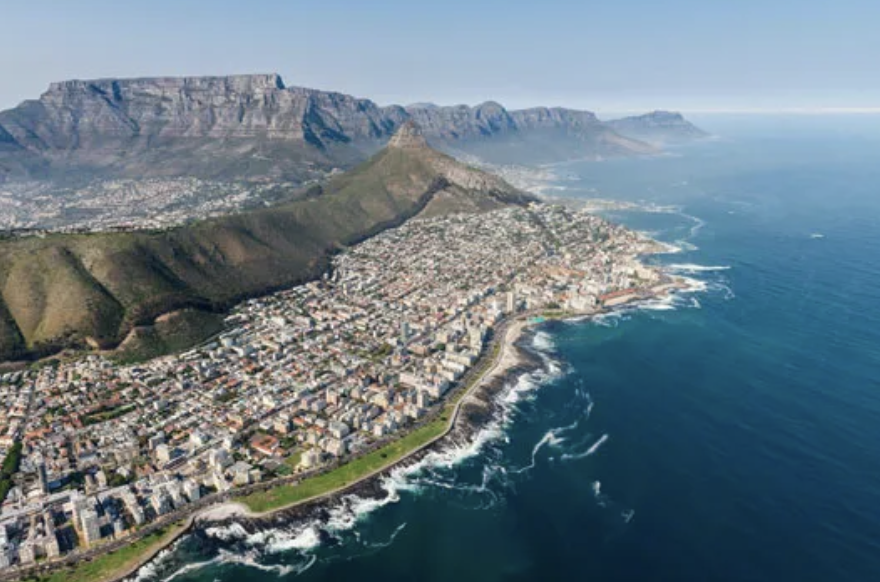
Also known as the CBD (Central Business District), it is the legislative capital of South Africa and serves as the economic hub of the City. It is located within the City, a natural amphitheater-shaped area bordered by Lion’s Head and Devil’s Peak.
Adderley Street is one of the main thoroughfares, offering a mix of shopping, dining, and historical landmarks. The Cape Town Central Business District is also home to numerous corporate offices, making it a bustling area during the day.
Iconic Landmarks
Table Mountain and Devil’s Peak
Table Mountain is perhaps the most iconic landmark in Cape Town. The slopes of Devil’s Peak provide a stunning backdrop to the City. The mountain and Cape Point at the end of the Cape Peninsula offer breathtaking views of the Atlantic Ocean and Table Bay.
The Atlantic Seaboard and Beaches
Camps Bay and Clifton
Along the Atlantic Seaboard, you’ll find some of the most beautiful beaches, including Camps Bay and Clifton. These beaches are popular destinations for both locals and tourists, offering pristine sands and clear waters.
Green Point and Sea Point
Green Point and Sea Point are located along the coastline, offering a mix of residential and commercial properties. The area is known for its promenade, which is perfect for leisurely walks with views of the ocean and Table Bay.
Southern Suburbs and Cape Flats
Rondebosch, Claremont, and Newlands
It includes Rondebosch, Claremont, and Newlands, which are known for their leafy streets and proximity to the University of Cape Town.
Cape Flats
The Cape Flats is a large, flat area situated to the east of the City Bowl. It is a historically significant area that played a role in the European settlement in South Africa.
Other Notable Suburbs
Constantia and Walmer Estate
Constantia is an affluent suburb known for its wine estates and is part of the Cape Winelands. Walmer Estate is a centrally located suburb offering stunning views of the harbor and the city.
Property for Sale in Cape Town
Cape Town offers a diverse range of properties, from luxury flats in the city center to family homes in the suburbs. Whether you’re looking for a property for sale in Cape Town’s CBD or the quieter suburbs, there are property solutions to meet every need.
Century City and De Waterkant
Century City is a modern suburb located north of the Cape Town City Centre, offering a mix of residential, commercial, and retail spaces. De Waterkant is a trendy area known for its vibrant nightlife and stylish flats.
Muizenberg and Strand
Muizenberg and Strand are coastal suburbs located along the False Bay coastline, famous for their beaches and surfing spots.
Cape Town Region and East Africa Connections
The Cape Town region is a central area that serves as a strategic gateway between South Africa and East Africa, enhancing trade and cultural exchanges.
Climate of Cape Town
The climate of Cape Town is Mediterranean, with wet winters and dry summers. This pleasant climate makes it an attractive destination for both living and tourism.
Conclusion
Cape Town’s City covers a diverse range of areas from north to south, each offering unique experiences. Whether you’re interested in the bustling city center, the tranquil suburbs, or the scenic beaches, Cape Town also has a rich cultural and historical heritage to explore.
Additional Information
- The port City of Cape Town serves as a gateway to the Cape Winelands and the rest of the Western Cape province.
- European settlement in South Africa began in Cape Town, making it a city rich in history.
- The City is known for its mix of modern infrastructure and historical architecture.
- For those interested in property for sale in Cape Town, there are numerous options for purchase, ranging from modern flats to commercial spaces.
Cape Town offers a unique blend of natural beauty, cultural diversity, and economic opportunity. Whether you’re a resident or a visitor, the City and its suburbs provide endless possibilities for exploration and enjoyment.